Posts

Showing posts with the label portrait

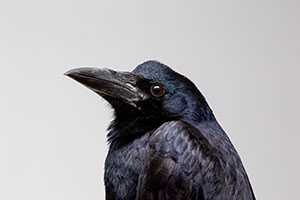
Crow portrait with backstory
Image
Have a story about the crow. During some frosty weather (About -20 °  C or -4 °  F) we fed some crows in our yard. Thus found this one dying from severe frost. It was running a bit, however could not really escape. I took it home and mother fed it. So it was living under the turned down fruits box for some time. The breath of the crow was quite hard. We decided it was sick for some reason. Googling gave us only idea we must take it to the wet in case we want  it alive. Time passed and breathing became normal. Cold and frost really passed away and we decided the crow must be free now. It life was not in danger anymore. We took it to the street and basically opened hands for it to fly. But it wasn't going to. After bringing it back home it started to bleed. Basically so much I thought it will not survive. Appeared out it was shot before. Seems like the bullet came through. Unsure if it will survive or now. It's now 3 to 4 weeks while we have a new living creature at o...

Common shrike female on a wire. Summer 2014

Image
Full Flickr versions [3 photos] >>>

Wood pigeon on a wire

Image

Black-headed gull in flight (Larus ridibundus)

Image
Found this one on a lake. It was angry about me getting close. Those lake gulls are typically not aware of many people passing by because lake it was captured is wild forest lake. So the bird was unhappy of my presence.  Full Flickr Version: Canon 6D, Canon EF 100-400L ƒ4.5-5.6 IS USM, at 400mm, ISO100, 1/500, ƒ/7.1

Juvenile common chaffinch feemale

Image
Full Flickr version: Canon 6D, Canon EF 100-400L ƒ4.5-5.6 IS USM, at 400mm, ISO640, 1/320, ƒ/5.6 

Common redstart and its prey (Male)

Image
From the 2013 Archives. Continuing to sort and post: Full Flickr version: Canon 650D, Canon EF-S 55-250 ƒ4-5.6 IS, at 250mm, ISO400, 1/320, ƒ/6.3

Great grey shrike

Image
Breeding takes place generally north of 50° northern latitude in northern Europe and Asia (where it is known as the great grey shrike), and in North America (where it is known as the northern shrike) north of 55° northern latitude in Canada and Alaska. Most populations migrate south in winter to temperate regions. The great grey shrike is carnivorous, with rodents making up over half its diet.  ( Wikipedia ) In the "Red Book" of Ukraine. Full Flickr version: Canon 6D, Canon EF 100-400L ƒ4.5-5.6 IS USM, at 400mm, ISO400, 1/640, ƒ/14 

Spotted flycatcher

Image
The  spotted flycatcher  ( Muscicapa striata ) is a small  passerine  bird in the  Old World flycatcher  family. This is an undistinguished looking bird with long wings and tail. The adults have grey-brown upperparts and whitish underparts, with some streaking on the breast. The legs are short and black, and the bill is black and has the broad but pointed shape typical of aerial insectivores. Juveniles are browner than adults and show the spots on the upperparts which give this species its name. ( Wikipedia ) Full Flickr version: Canon 6D, Canon EF 100-400L ƒ4.5-5.6 IS USM, at 400mm, ISO1600, 1/400, ƒ/6.3

Shrike and favourite meal of its younger - grasshopper

Image
Full Flickr version: Canon 6D, Sigma APO DG EF 70-300, at 300mm, ISO100, 1/200, ƒ/13